French blood service EFS: plasma cold rooms tampered remotely
Second wave of refrigeration attacks: at three EFS sites, set points were raised to +110 °C via a supplier. What we know and what healthcare should do now.
📌 Later developments: Fridge sabotage: France seeks warrants for Iran’s Shahid Kaveh (November 9, 2026)
The attacks on refrigeration systems have reached healthcare. During the night between Sunday 1 and Monday 2 November 2026, the cold room settings at three sites of the Établissement français du sang (EFS), the French public body that collects, prepares and distributes blood, were changed remotely. Alarms allowed staff to act in time: according to the EFS, no products were lost and there was no health impact.
Below is what is new compared with the October attacks on French supermarkets, which we have already covered on ARX News: the second wave across Europe, the role of the supplier, and what changes for hospitals, blood services and the pharmaceutical cold chain.
What happened
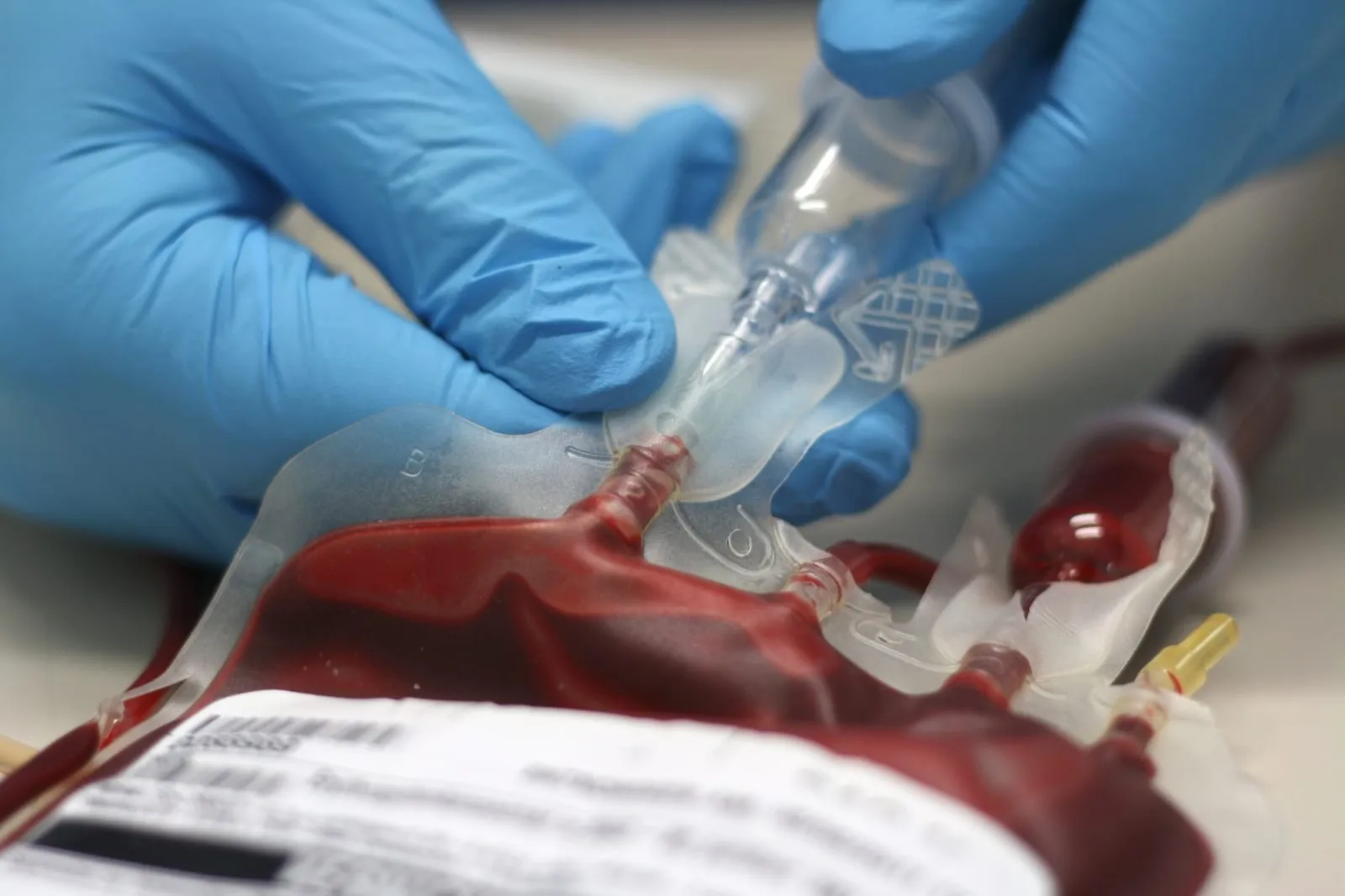
The story was broken on 3 November by the weekly Le Canard enchaîné and picked up by several outlets. The same day the EFS confirmed in a statement that temperature and defrost thresholds in its cold rooms had been raised to very high levels. The rooms held plasma bags for transfusions and for manufacturing medicines, as well as donor and biobank samples.
According to the EFS:
- it was not the direct target: the attack hit a supplier of refrigeration solutions and its cold room supervision and control systems;
- monitoring and alarms detected the anomalies during the night; Infosecurity Magazine reports that an on-call technician noticed the abnormal temperature rise;
- depending on the case, equipment was brought back under control or taken out of service, and products were moved as a precaution to other cold rooms;
- blood collection and distribution did not stop; technical teams are working with ANSSI and the Ministry of Health, and temperature monitoring has been stepped up.
According to Reuters, cited by Security Affairs, the ministry said the situation was under control on Wednesday 4 November and remote access to the affected cold rooms was disabled. Infosecurity Magazine adds that, so far, nothing indicates that EFS IT systems are affected.
The supplier and the third-party component
The EFS has not named the supplier. Le Canard enchaîné identifies it as Coolworld, a Dutch company renting temperature-controlled equipment in France, Germany, Ireland, the Netherlands and the UK. On 4 November Coolworld confirmed an incident involving the remote monitoring software used in refrigeration systems, affecting a limited number of units, and stated that the vulnerability reported in the media concerns a component from a third-party supplier, outside its direct control. It named neither the component nor the measures taken.
The entry point, the credentials used and the model of the EFS controllers remain unknown: an EFS spokesperson could not tell The Record.
Technical details
The tampering. According to Le Canard enchaîné, cold rooms that normally operate at around −30 °C were reprogrammed with a target value of +110 °C, along with defrost cycles. That is the value set on the controller, not the temperature reached by the plasma. The weekly places the affected sites in Burgundy-Franche-Comté, a detail reported by Infosecurity Magazine.
The second wave. According to The Record, businesses in at least 11 countries have been hit in recent weeks: Belgium, Estonia, Finland, France, Germany, Ireland, Luxembourg, the Netherlands, Portugal, Sweden and the United Kingdom. BleepingComputer counts more than 115 stores across Belgium, the Netherlands, Sweden, Luxembourg, Ireland and Estonia: systems shut down or temperatures changed, up to 50 °C in one store. The EFS is the first French case in this wave and the first to affect healthcare.
The link with October. Belgian refrigeration company Sabcobel, cited by BleepingComputer, says the November attacks exploited the same vulnerability as the October ones, which hit Danfoss AK-SM and AK-SC controllers and, according to the 16 October update of the CERT-FR alert cited by Cybersecurity360, Copeland and Dixell XWEB systems as well. It is not confirmed that the known Danfoss AK-SM 800A vulnerabilities (CVE-2025-41450 and CVE-2025-41451) were used, and no source says which controllers the EFS used.
Factory credentials. According to Lupovis, speaking only to Help Net Security, from 20 to 30 October there were login attempts on Danfoss AK-SM controllers from “bulletproof” hosting networks, mostly with the publicly documented factory-default credentials: in the company’s view, preparation for a synchronised attack.
Attribution. No claim for the EFS attack. Cybersecurity360 reports that the pro-Russian groups NoName057(16) and Z-Pentest claimed the attacks on European supermarkets, Italy included, but the claim is unverified and there is no proven link to the EFS. UK authorities have not attributed the incidents.
MITRE ATT&CK for ICS. Based on the reported facts, our reading: T0822 (External Remote Services) for access via the remote monitoring software, T0836 (Modify Parameter) for set points and defrost, T0812 (Default Credentials) for the attempts observed by Lupovis, not confirmed for the EFS. The sources publish no indicators of compromise.
Impact on European and Italian healthcare
The EFS case shifts the risk from lost goods to continuity of care: plasma, blood components, temperature-sensitive drugs and biological samples depend on equipment often managed by suppliers, with their own remote access that can bypass hospital network controls. Healthcare is one of the NIS2 sectors: for entities in scope, Italy’s Legislative Decree 138/2024 requires managing supply chain risk, and the compromise of a cold storage system is an incident to assess for notification to CSIRT Italia (ACN). According to Cybersecurity360, on 3 November ACN reiterated its urgent measures for the cold chain after new incidents in Italian food retail.
What to do now
- Full inventory: for every cold room, fridge or freezer, the controller, firmware, who manages it and how it is reached remotely, including rented equipment and supplier cellular routers outside the corporate network.
- Ask your suppliers which remote monitoring software they use, whether it is involved in this wave and what measures they have taken.
- Remove direct exposure: no management interfaces on the Internet; remote access only via VPN or a separate management network, with personal accounts and multi-factor authentication. If it is not needed, turn it off, as the EFS did.
- Credentials: remove factory defaults and review the accounts on the controllers.
- Check the settings: set points, defrost and alarm thresholds against the approved configuration.
- Alarms independent of the controller, with night-time on-call staff: they were decisive at the EFS.
- Transfer plan for products to alternative cold rooms, with time and temperature traceability.
- If you use Danfoss AK-SM/AK-SC, Copeland or Dixell XWEB, also follow the CERT-FR measures.

How ARXDOME helps
ARX Expose shows what an attacker sees from outside: open ports and recognised products on your company’s public addresses, useful to find out whether a system’s interface can be reached from the Internet. ARX Watch finds devices on the corporate network with nothing installed on them, such as equipment controllers, and alerts you when a new one appears. With ARX Sentry, firewall logs flow into the portal and access to the perimeter stays under control.
Last updated: